Archive for the 'News' Category

Twentieth-Century Healthcare, Part I

by Prof. Hangen - April 2nd, 2013

Over the next few weeks we’ll be exploring aspects of health care in the twentieth century: the post-Flexner, vaccine-and-antibiotic era in which a gigantic industry of health care began to flourish – and during which the medical profession’s opposition to centralized health care emerged with a vengeance.

For Wednesday, April 3rd – your Disease Report papers are due, but also: please bring Rutkow’s book and be ready to talk about chapters 8 and 9.

Relevant links:

A (hilariously campy) British government 1964 film looking back on the 1940s discovery of penicillin

See Jack Gibbon’s heart-lung machine in action (BBC Four)

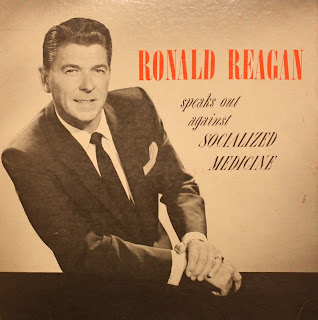
Hear Ronald Reagan in his 10 minute LP recording from the AMA’s “Operation Coffee Cup” 1961 lobbying effort (never mind the images, just listen to the recording)

Listen to the 1948 “Truth or Consequences” episode introducing the original “Jimmy” of the Jimmy Fund

Next week we’ll read a short, but gripping, historical and medical detective book delving into the abandoned suitcases of inmates (is that the right word?) at a big New York mental hospital in the 1920s-1950s. I think you’ll really enjoy reading it and considering its thought-provoking depiction of care for the mentally ill. Read chapters 1-6 of The Lives They Left Behind for Monday, April 8th and Chapters 7-Epilogue for Wednesday, April 10th. I’ll then hand out a prompt for the third response paper, due on Wed 4/17.

Pox in One Sentence

by Prof. Hangen - April 1st, 2013

Summing up your #1 takeaway from Michael Willrich, Pox: An American History:

Continue reading →

Smallpox in Progressive-Era America

by Prof. Hangen - March 9th, 2013

This week, we begin reading Michael Willrich’s thorough and well-written account of smallpox epidemics and eradication campaigns at the turn of the 20th century. Think about how to connect the story Willrich tells in such detail with the overall framework we’ve gotten from Rutkow: the rise of bacteriology, scientific thinking, public health, teaching hospitals, and other institutions of modern medicine. And notice, too, how race and class intersect with this story in perhaps unexpected ways.

For Mon 3/11 – Read Pox Prologue and Chapter 1

For Wed 3/13 – Read Pox Chapters 2-3

Over spring break, read Pox Chapters 4-5 for Mon 3/25

Reminder:
the Disease Project poster and presentation day is Wed 3/27 of the week we come back from break.

Addenda: Radium Girls

by Prof. Hangen - March 5th, 2013

RadiumGirlTheseShiningLivesI mentioned “radium girls” in class – here are a couple of links for more information.

Alan Bellows, “Undark and the Radium Girls,” Damn Interesting #241
Deborah Blum, “The Radium Girls,” Speakeasy Science 24 March 2011

There’s also a play based on their experiences, “These Shining Lives” (the photo is from a recent Minnesota production of the show).

See also this eyepopping post for more on the early 20th century fascination with radium and radiation in advertising and product names.

Classes 2 and 3 (Week of Jan 28)

by Prof. Hangen - January 28th, 2013

General News: I added some links in the sidebar regarding Chicago Style footnote citations. And/or – you should own Diana Hacker, A Writer’s Reference (it is available in the bookstore; I highly recommend owning it throughout your four years here) which has a whole section on Chicago Style citation. I will also demo Chicago Style in class.

Monday 1/28: We discussed the remainder of Porter’s book Blood and Guts (good discussion, everyone!) and selected books from this list you got in class today. If anyone hasn’t yet chosen a book, please email me ASAP with your choice. The ones already taken are:

Bown, Scurvy
Bristow, American Pandemic
Brown, The Pox
Cooter, In the Name of the Child
Crosby, The American Plague
Derickson, Black Lung
Gosling, Before Freud
Halliday, The Great Filth
Healy, Mania
Jones, Death in a Small Package
Oshinsky, Polio
Parascandola, Sex, Sin & Science
Pettit, A Cruel Wind
Reverby, Examining Tuskegee
Roe, A Plague of Corn
Swedlund, Shadows in the Valley
Warren, Brush With Death
Wolf, Deliver Me from Pain

Begin the process of borrowing and reading your chosen book, either from our WSU library, a local public library, or via inter-library loan request.

Wed 1/30: Please read (and bring) Rutkow, Seeking the Cure, Chapter 1. Bring a printed 2-3 page (double-spaced) response paper to class that considers one or more of these questions:

  • Who were medical experts in colonial America, and what was their training?
  • Why was medicine “just another colonial trade”? How does Rutkow’s description compare to Porter’s depiction of pre-twentieth century medical strategies as a “box of blanks” (p. 39)?
  • How (and why) did John Morgan hope to transform the country’s medical education system? How successful were his efforts to professionalize medicine in the late 18th century?
  • Characterize the field of medicine in colonial times. Can you extrapolate from this chapter what the prevailing theories were about disease in that era (i.e. physiological or ontological as explained in Porter p. 73, or something else entirely)?
  • We might dismiss medicine in the colonial era as backward or primitive, but what were the benefits or strengths of colonial medical practices, if any?