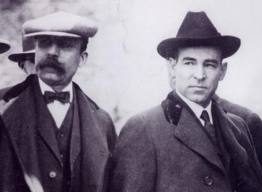
Station 2: The Sentencing Statements of Sacco and Vanzetti
Read and discuss what Sacco and Vanzetti said as they were sentenced to death in 1927, and talk about Edna Saint Vincent Millay’s “Justice Denied in Massachusetts”
Link: overview of the case, if you need a refresher
Handout: S&V’s statements, “Justice Denied” poem
Station 4: Poetry and Art of the Harlem Renaissance
The online link takes you to a web gallery of images and sculpture created by artists of the Harlem Renaissance. In addition, you have a small packet of poems – read and discuss a few with your group.
Link: Art Focus on Harlem Renaissance (PBS African American World)
Handout: HR Poem Packet
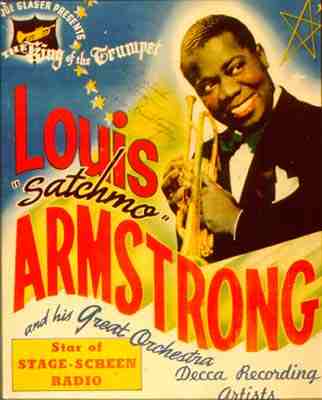
Start of class: we’ll screen this clip as a demonstration of what jazz is and what to listen for – it’s a master class of the great jazz trumpeter Winton Marsalis, riffing on “Happy Birthday.”
Tagged: Spr12 Filed under: Workshop Days :: Comments Off on Workshop #2: How the Twenties Roared
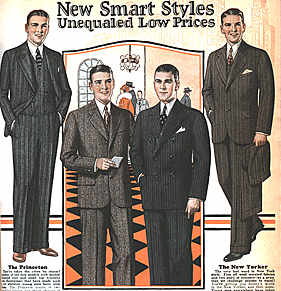
The week of 2/6 we will start a new unit, on the 1920s. Our main focus in class will be EH Ch 22 on Progressivism and Ch 24, “The New Era.” The online quiz for this unit will cover chapters 21 and 23.
Mon 2/6 – Progressivism. Progressivism is a word (like Reconstruction) that encompasses not only a time period but also a complex social movement and political transition. Read EH Ch 22 for background before class.
Also, the next online quiz will open on Monday by noon. It will cover chapters 21 and 23 and be open until midnight on Friday, Feb 10th. As before, you can take it up to three times and Blackboard will record your highest grade.
Here’s a shorter version of the slideshow from Monday. I know some of the text is small in the embedded version, so click on the “fullscreen” icon in the lower right corner of the mini-player to bring it up larger on your screen.
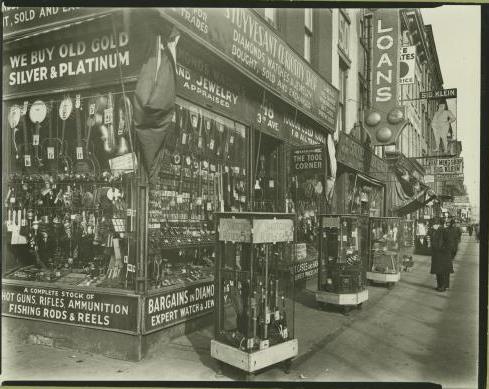
Each of these numbers is a link taking you to a collection of photographs, maps, or a film about American cities in the late 19th century. Working in pairs, apply critical thinking and primary source analysis questions to the source, and use it to expand your working knowledge of the late 19th century city. You’ll receive a handout with ideas and suggestions for how to approach and analyze these kinds of visual image sources (if you miss class – the handout is here).
Work with one number at a time (pick from the basket in the middle of the room). Take your time with the sources. If you only get to one during this class period, that’s fine. This is not a race, it’s an opportunity to explore in depth.
End of class writing prompt: What did you learn about your city? What did you learn about the sources that historians can use to study the 19th century city?
For our first workshop day on Friday 1/27, please bring your laptops to class. We will be working in pairs or threes and the more laptops we have in class, the better this will go. To prepare, read the section on “Digital Detecting” on EH p. 527. We’ll work with historical photographs, maps and film clips to help us understand the late 19th century urban environment.
NOTE: We have a NEW classroom location, since Sullivan 320 is so cramped. From now on, we will meet in LRC-168. This classroom is on the bottom floor of the library building. The easiest way to find it is to enter on the Student Center side through the sliding glass doors into the lobby with the vending machines. Take your first hallway on the right, and then it’s the first one on your left.
Your next Skillbuilder is due on Monday, 1/30. Please use the tabs above and read the “Skill Builders” page. You may write about any of the “Dueling Documents,” “Historian’s Toolbox” or “After the Fact” sections from *anywhere* and any time period in your textbook. If you would like to go deeper and explore something that’s not in your textbook, I’ve now posted a list of ideas I’m calling “Extreme Skill Builders” – check out the tab above. Feel free to consult with me if you have any questions about these assignments. On the Skill Builders page, I’ve posted a couple of good examples from past semesters so you can see a model of how these work.
Remember, the online quiz (found on Blackboard under “Quizzes”) closes on Friday night at midnight. You can take it up to 3 times; it draws from EH Chapters 18 and 19.
(laptop illustration, used under Creative Commons license from ichibod)
Here’s the footnote slide from today, for your reference as you write your Skill Builders. Remember, either the Diana Hacker link in the left-hand sidebar, or your personal copy of Hacker’s Writer’s Reference is a great source to learn more about Chicago Style citation. If you ditched your Hacker after your English comp class was over, I recommend you buy one at the bookstore and KEEP IT.
Click on the image to enlarge it
Tagged: Spr12 Filed under: Writing Advice :: Comments Off on Meet the Footnote
Reminder: the online quiz is now open, until Friday the 27th at midnight. Please take it by going to Blackboard –> Quizzes. You may take it up to three times, and Blackboard will record your highest score.
Reading for Wed: EH Ch 20, pp. 540-545 “A New Urban Age”
What is so new about this “new urban age”?
What were some of the social costs of the growth of industrial cities in the late 19th century?
Who were the “new immigrants” that peopled these cities?
Tagged: Spr12 Filed under: In Class :: Comments Off on For Wed 1/25, Rise of the City