Exhibit A: Public History
Posted by Tona in blog posts on 25 April 11
Last week was the time to level with my methods course students. No, you won’t all get academic or teaching jobs, even if you wanted them. And let’s be honest: history learning happens in many settings that aren’t classrooms. Let’s not pretend that history classes are the best place for history learning. They’re certainly not where most people learn their history.
With those bold admissions out of the way, we could tackle several more interesting questions: where do people learn history? And how can historians position themselves to be part of that learning? Where might professional historians encounter their various publics?
The whiteboard filled quickly.
Read the rest of this entry »
Hysteriography Historiography
Posted by Tona in blog posts on 21 April 11
In this last unit of the course, I’m hoping to expand my students’ sense of who “does” history. We’re looking at people who construct historical narratives, who make historical interpretations, and who profess history – people who work as historical professionals, no matter what their professional training. My goal is for them to see that history is an expansive tent, full of rich complicated arguments and that it’s a lifelong endeavor with many career paths. We will talk about historiography, film, public history, professional ethics, and history on the internet. The only trouble with this section of the course, I’m finding, is that I could teach an entire semester on the topics I’m only giving one week to. This is such a whirlwind introduction, I worry that it doesn’t allow the kind of immersion that sparks real interest. Sigh. Deeper topics would mean fewer topics, and I feel like these are all essential.
Historiography: honestly, we do so little of this at the undergraduate level in our institution that it’s the goal of the methods course to introduce students to this concept at a very basic level. We don’t do this in the survey courses at all. The 200 and 300-level courses are all content based. Our curriculum is organized around (as many are, I’m sure) the idea of regional diversity, not necessarily methodological diversity or around historical processes. We don’t have a standalone historiography course, perhaps in part because there’s skepticism that anyone would voluntarily take such a thing if that’s what it were called. Williams, in Historian’s Toolbox, remarks offhandedly that all history papers should have a historiographical section. This becomes reflexive for grad students and academics, but I realized I had never made that expectation explicit in any of the papers I regularly assign. I got partway through our class discussion about what historiography is and how to research the historiography of a topic, and was seeing puzzled faces so I stopped in the middle and asked my class: “Have you seen this before? Or is this new?” And they all said: this is new to us.
Read the rest of this entry »
Mapping as a Source and a Method
Posted by Tona in blog posts on 11 April 11
For the last Historian’s Craft “sandbox” week we looked at visual images, particularly maps. This is because the HistoryMatters survey course has a terrific essay by David T. Stephens, “Making Sense of Maps,” with some online exercises (although a few had broken links, alas). The analytical work of “visual images” week could also have been well served with a different source base instead, such as photographs, political cartoons, etchings, flags, architectural drawings. We just happened to use maps, partly because it can broaden out into the concept or act (the method) of mapping itself.
Read the rest of this entry »
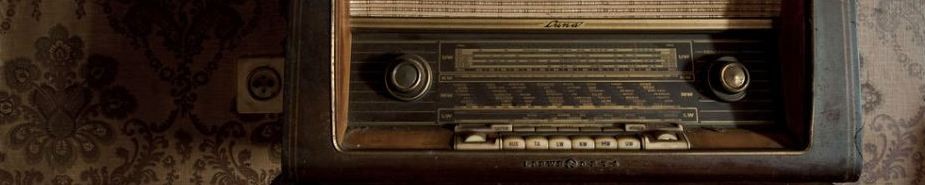
Air America: Radio in the Methods Course
Posted by Tona in blog posts on 5 April 11
Yesterday when I was driving home from campus I heard a radio piece on the global show “The World” about researchers in Antarctica who are taking ice cores and melting them to release the air bubbles so that they can study the “ancient air.” Listening to radio is like that for me, it’s like popping the cork on the ambient sound of some long-ago studio, theater, or outdoor location and hearing the ancient air. Even the wheezes and static are part of the charm of an analog age.
It presents some interesting wrinkles in the methods course, because radio and sound recordings are not like other texts. They cannot be “skimmed” or highlighted like transcripts of documents; you “read” and “translate” them differently from visual texts; they rely on a sense that in many “digital natives” is not particularly well-honed. But the advantages are tremendous: they provide a window onto the past of powerful immediacy, they invite careful listening because you experience them in real time as did their original listeners, they are quite unlike the video, photographic and documentary evidence that are the common ingredients of methods courses, and they serve as a reminder of the ubiquity of radio in the early-to-mid 20th century and the profound transformation in aural media since that era. People tend to forget about radio, or to not know much about it to begin with, unless they’re old-timey-radio junkies (and there’s a very vibrant collector/amateur subculture when it comes to old-time radio, or OTR “otter” for short), but once they hear a little, they realize this was a whole world, which is itself a window onto the world that produced it. It engages students in a way that few other sources can, but it does take some unpacking, framing, and some methodological discussion.
Read the rest of this entry »
GovDocs 101
Posted by Tona in blog posts on 14 March 11
Last week I conducted a workshop for Honors students called “Notetaking for the 21st Century” (if you’re interested, my “online handout” and Prezi are posted on my site). I began by reflecting on what research was like when I began graduate school (in 1992, now called “back in the day”). Let’s rewind…
Read the rest of this entry »
Letter Detectives
Posted by Tona in blog posts on 9 March 11
We’re in the middle unit of the methods course, where each week is a different sandbox to play in. I have to admit, that sounds all well and good, but I can tell that my students are feeling a little unmoored and I think they miss the sense of structure that the first part of the course had. It’s not clear to them what they’re supposed to “do” now. No one’s really given them permission or opportunity to just play and mess around before. It might not be clear to them that this is something you only learn by doing. I will have to remember next time to be more up-front in the syllabus that this is my expectation for the middle unit of the course. I just hope that having clarified expectations will be as freeing as I want it to be. One of my new mantras is “the most effective leader is not one who fills space, but one who opens it.”[1]
The Y of it All
Posted by Tona in blog posts on 2 March 11
This post is about serendipity.
In the historical methods class, we’ve been using Williams, Historian’s Toolbox as our guide to methodology, and in his chapter on Sources, he discusses non-documentary historical evidence, including artifacts, archaeology, and genetic/forensic evidence. His case study was the historical controversy over the paternity of the children of Monticello slave Sally Hemings, and how genetic evidence (DNA analysis of male descendants, conducted in 1998) had totally changed the conversation because the scientific evidence overwhelmingly pointed to a genetic relationship between Jefferson and Hemings. In reproducing the genetic results, Williams made the mistake of captioning the image: “For Genetics Students Only!”
Now, that got my dander up. Big time, in fact. True, as a Ph.D.-holding historian I could not make head nor tails out of the results. But I resented being told that it was “off limits” for me or my students. As if only genetics students could or should take it on. Besides, I started college as a biochem/genetics major – I’m one of those midstream major-changers whose life took a totally different direction than I imagined it would – and so I can appreciate when science and history cross paths.
Fortunately our genetics professor here on campus is a good friend of mine and I thought he might be game to come be a guest in my class to help interpret the data with us. Better yet, it turns out he teaches a genetics class in the same time slot as my historical methods class, and they were just about to start a unit on genetic linkages, and the Jefferson-Hemings DNA results could be a good way to introduce that concept to his class, so he proposed joining our classes for a session. I would talk about the stakes in the debate and the implications for historical interpretation, and he would explain the genetics results for both my students and his own. Shazam!
Read the rest of this entry »
History: Doing is Writing (Research Methods 101)
Posted by Tona in blog posts on 8 February 11
Our readings for this week in the Methods Course (History 411) nudged students to think about their own process of research and writing, with three complementary “how to” readings on writing history papers: a chapter from Robert C. Williams, The Historian’s Toolbox, Mary Lynn Rampolla’s A Pocket Guide to Writing in History, and “Writing the History Paper” (via the Dartmouth College Writing Program).
In discussion, we began with the “cognitive habits” of historians: how do they think? What do they think about? What kinds of questions are they concerned with? What is the “unnatural act” of thinking historically (a la Sam Wineburg)? What is “scholarly conduct” in historical writing?
From there, we moved to a discussion of the research/writing process, now that their first paper topic has mired them in the messy middle of it. Read the rest of this entry »
Still Crazy After All These Years
Posted by Tona in blog posts on 8 February 11
With apologies to Paul Simon for stealing his song title… I’m cross-posting from the Historian’s Craft website a post about our class discussion last week (Thurs 2/3) about the historical conundrum that John Brown poses – or any complex real historical figure, really, but we seized on Brown in our class session because James W. Loewen makes such a hero of him in his chapter “John Brown and Abraham Lincoln: The Invisibility of Antiracism in American History Textbooks” (Lies My Teacher Told Me: Everything Your American History Textbook Got Wrong) – and because the moral question posed by Brown’s very existence still seems starkly drawn.
Read the rest of this entry »
The Methods to Our Madness
Posted by Tona in blog posts on 25 January 11
This semester, I’m piloting a methods class in our department. Well, really, I’m kind of co-piloting it; after lots of departmental conversation and some rough planning last year, a colleague of mine wrote the first version of the syllabus and taught it last term as a hybrid class in the night school with half MA students and half undergrads. The plan is for the course to be required for all of our majors and minors starting next academic year, so this year we’re giving the course a couple of dry runs with smaller enrollments (read: students who are taking it out of interest, not because it’s a requirement). And I’ve got it this term (Spring 2011).
The course is named after, and somewhat patterned upon, “The Historian’s Craft” at UConn, described by Nancy Shoemaker in an article for the January 2009 AHA Perspectives, “Where is the History Lab Course?” That article came out just as we were designing ours and we found it most helpful. We didn’t adopt their semester-long historical investigation that results in a crowdsourced monograph project (although that’s a very cool model), but we did design ours as a hands-on “lab” course. And we managed to snag the course number “History 411,” which we thought was most appropriate.
Read the rest of this entry »
